
Maybe the outlet used statistics from 5 years ago, or they got the quote wrong, or they mixed you up with somebody else who happens to share your name. The damage is done, and once that mistake goes live, it can spread all over social media within a matter of hours. This keeps most individuals from reaching out – they believe news organizations will either fight them on corrections or just ignore their complaints altogether.
Canadian news outlets will actually fix the mistakes when brought to their attention. What they want to see from you is evidence and a respectful tone in your message. Send them a request that shows them what the error is and backs it up with proof – it’s going to get handled by their editorial team much faster than something vague and general would. News outlets also separate factual errors from opinion disagreements, and which category your issue falls into determines if a journalist will actually fix it or just ignore your email.
This whole process takes some time, and you’ll need a little bit of research ahead of time. Have the right documents ready to go, and then contact the right editor at the publication. If that doesn’t get you anywhere, move up the chain and go through their formal request process – each step depends on the one that came before it. Jumping ahead just makes the whole process take longer instead of giving you a faster result.
Here are the steps to get your correction request heard by the Canadian media.
What Makes an Error Worth Reporting
Before you contact a news outlet to ask for a correction, you should take a bit to see if what you’ve found is actually an error worth reporting to them. News organizations are usually happy to correct factual mistakes when they happen, and most of them have processes set up specifically for this reason.
A factual error is the type of mistake that you can prove – like an incorrect date, a misspelled name or a wrong job title. A reporter might write that your company launched in 2015 when it launched in 2018. Media outlets will usually correct this type of mistake. Opinions work differently – a piece could say that your product didn’t perform well, but you believe it performed great. When this happens, it’s a difference of opinion instead of a hard error, and as you’re free to respond with your perspective, most newsrooms aren’t going to issue a formal correction just because you disagree with their take.
Sometimes the line between fact and opinion gets a little fuzzy. If a reporter mentions a number in their story that you’re sure is wrong, you can prove it. If a reporter quotes you as saying something you never actually said, you can prove that one, too, and both are worth reporting to the outlet. But when they write a piece that argues your industry has big problems and you just feel like they’re being unfair to you, those situations are much harder to challenge because news outlets get to make editorial calls and draw their own conclusions.
Another factor to consider is how fast you take action. Canadian news outlets usually expect you to point out errors within about 30 days after they publish a story. A few of them will give you less time than that, and every once in a while, you’ll find one that’s willing to work with you if you have a legitimate reason for waiting. Whatever their policy is, the sooner you contact them, the better your chances that they’ll fix it. When an error has been live on their site for months, and no one has mentioned it, it can become a much harder sell to get them to go back and make changes.
Once you’ve located a legitimate factual error in the report and double-checked that you’re still within the reporting window, then you’ll be ready to move ahead with your dispute.
Gather Your Evidence Before You Reach Out
Contact any news outlet after you have your supporting materials and information ready to go. Organization matters quite a bit if you work with busy newsroom staff, and if everything is prepared ahead of time, it can be the difference between receiving a response and just having your pitch sit in their inbox forever.
First, save the post’s URL and grab a screenshot of the page, as the error is still visible on it. These steps matter mainly because news outlets have a habit of quietly updating their articles after publication. When they do this, they don’t always leave any record or documentation about what changed. Your screenshot is your evidence of what the piece actually said at that particular point in time – it gives you something concrete to point to if the page gets edited or changed before the outlet responds to you.

After that, pull together any documents or records that can support your correction. An official report works great for this, and public databases or government documents are just as useful – anything that shows what the accurate information should be. The stronger your evidence is, the easier it gets for the outlet to see the error and to get it corrected.
News outlets and media organizations get flooded with messages from their readers every day. Most of them are either pretty vague or heavily opinion-based. To cut through all that noise, show up with something concrete and verifiable. A factual error gives them something they can check and correct on their end.
A few extra minutes of prep work now will save you from days of back-and-forth emails with support teams. Having your URL ready, your screenshot saved, and your other materials together in one location will let you submit everything faster without any fuss.
Reach Out to Canadian News Outlets
Once you’ve put together your evidence, it’s time to actually contact the outlet and let them know what you found. Most big Canadian news organizations already have dedicated systems in place for this. CBC, the Globe and Mail and the Toronto Star all have online correction forms or emails where you can send your questions. To find these on a news outlet’s website, scroll down to the footer area and look for any links that say “Corrections” or “Contact Us.”

Your message should be short and follow the facts when getting in touch with a publication about an error. Start off with the post’s headline and the date it was published, so they’ll know which piece you’re talking about. From there, explain what the error is and why it matters. Give them your evidence (a sentence or two is usually enough) and wrap it up with a suggestion on how they might correct it.
The way you write your message matters quite a bit here. A calm, respectful email will be more helpful compared to something angry or accusatory. Editors and journalists are far more likely to take you seriously if you sound like you know what you’re talking about and stay level-headed. Most reporters aren’t deliberately trying to spread misinformation – they’re human, mistakes happen in any profession, and most of them want to get their facts right.
Your message doesn’t need to be long or tough at all. A few sentences (three or four should do it) will do the job as long as you explain what went wrong and back it up with the basic facts of what happened. The whole point is to let them know there’s a problem that needs their attention – the sort of issue any responsible business would want to know about so they can make it right.
If a week passes and you haven’t heard anything back, or if the outlet decides to turn down your request, you still have a few other options for how to move forward.
When Should You Contact a Public Editor
If your first message didn’t get you a correction, you have one more option you can try before taking your complaint outside the news organization. Plenty of outlets actually run their own internal complaint systems, and these departments are set up for this type of situation.
Plenty of newsrooms have a person called a public editor or reader advocate on staff. What this person does is to manage complaints that didn’t get resolved by the reporter or their editor. They can take a fresh look at your complaint without the baggage and tension from the first round of back and forth, since they work as a bridge between readers and the newsroom. On top of that, they actually have the authority to demand changes when the standard complaint process breaks down or fails to resolve the issue.

If the outlet doesn’t have a dedicated reader advocate, you can contact a person higher up in the editorial chain instead. Most outlets will list their senior editor or editor-in-chief on the contact page or the masthead. Editors at this level have more pull in the newsroom, and your complaint is more likely to get the attention it deserves.
This tends to work best if you have a complaint that actually should have a closer investigation to verify the facts. It’s also a move if you feel like the coverage was slanted or one-sided, or if the same mistake kept appearing in multiple articles instead of in just one.
Once you reach out for the second time, mention that you already tried contacting them and you either never heard back or the response they gave you didn’t fix your concern. Stick with that same polite, respectful tone from your first message – it’ll help. What you want is to get a person with more authority to review your situation – not to create friction with the newsroom staff.
Most news outlets will spell out their complaint process right on their website, and you’ll usually find it in the sections about editorial standards or reader feedback. When those instructions are available, it makes sense to follow them word for word. But if you can’t find a formal process after poking around on the site for a few minutes, a well-written email sent directly to a senior editor should work just fine.
File a Complaint with Industry Boards
When the newsroom won’t help (or just doesn’t respond at all), you can take your complaint to industry organizations instead. These groups are there to manage situations just like yours, and their entire job is to work through disputes between readers and the news outlets that published the stories.
Any complaints about a newspaper go to the Canadian Press Standards Board, which deals with accuracy and fairness in print journalism. Television or radio complaints get reviewed by the Canadian Broadcast Standards Council. These two services are completely free to use.
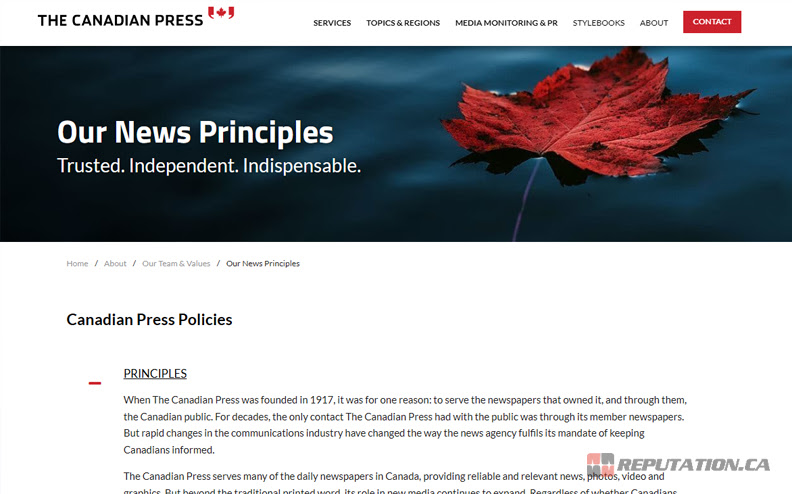
Most review boards won’t even look at your complaint unless you can show that you already tried to contact the news outlet directly on your own first. Documentation matters at this stage, so save copies of your emails and write down detailed records from any phone conversations you have with them. Review boards are going to ask for proof that the outlet had a fair opportunity to fix the problem before you decided to bring them into the mix.
The Canadian Broadcast Standards Council makes decisions, and its member stations have to follow them. The rulings they issue actually mean something, which is what makes them helpful if you’re looking for accountability from a broadcaster, though it does take some time to work through their process, and you’ll need to give them the full records of what happened along with your explanation of why you think the coverage was wrong or unfair.
This formal path isn’t the right choice for every situation. Small errors or problems that have already been corrected don’t need this much effort on your part. When a mistake has caused damage, and the newsroom won’t correct it or acknowledge the problem, that’s the case these boards were created to manage.
The complaint itself needs to be written out in full detail, and it should explain what outcome or resolution you’re hoping to achieve. Plan on a wait time of a few weeks at a minimum, and in some cases, it can stretch out to a few months before a final ruling gets issued. The board takes its time to go through each case and makes sure that each party gets a fair opportunity to present their side of the story and submit any relevant evidence.
Monitor and Manage Your Reputation
News outlets can be pretty slow to issue corrections, so you’ll need some patience with this whole process. Fortunately, you have a few different options to work with, and each of them gives you a genuine way to get the accountability you’re after.
First, contact the journalist directly, then you can move it to a public editor if needed, or file a formal complaint with an industry body when the situation calls for it. No matter which path you choose, stay calm and make sure everything stays professional in your communication. And make sure that you can back up each claim that you make with strong evidence. Bring all three of these pieces together (patience, professionalism and proof), and you’ll stand a much better chance of being heard and seeing the results you want.
Media outlets across Canada actually do care about accuracy, and especially once you’ve shown them there’s a problem. Journalists and editors usually want to get the facts right, and they know that mistakes can damage actual individuals and their reputations in long-term ways. Not every complaint will get you a full retraction, and I’d be lying if I told you otherwise. Your voice does matter in this process, though. Stay at it and reach out again if needed, and don’t let them forget that your reputation and the truth are worth defending.

Getting an outlet to publish a correction is a big win. But sadly, that doesn’t always mean the problem is solved. Even after they update the story, inaccurate reporting can leave long-term marks on how customers and clients view you or your business online. A team with experience in reputation management can work with the aftermath and actually repair what’s been done.
When you’re ready to get your online reputation back on track, we at Reputation.ca have the expertise you need. We’re Canada’s leading team for online reviews, social media management, public relations work and full crisis response. Maybe you’re facing cancel culture, or maybe you just want to build a stronger presence online – whatever the situation, we have your back.
Get in touch with Reputation.ca, and we’ll put together a plan that actually fits what you need.