Wikipedia has earned itself a reputation as one of the most reliable places to find information online – that also makes it a tempting target for scammers.
Plenty of businesses and people want to get their own Wikipedia page. But they don’t actually understand how the platform works. Scammers exploit that gap by promising results they’d never deliver, and they charge massive fees for work that either violates Wikipedia’s guidelines or just never gets published on the site.
Wikipedia’s volunteer editors will eventually find your paid-for content, and when they do, they’re going to delete it and ban every account that was connected to it. What gets left behind is a permanent public record that shows you tried to game the system. That record does far more damage to your reputation than having no page would have ever done. Plenty of victims have dropped thousands of dollars just to find out that their “Wikipedia page” got posted to some fake lookalike website, or it just vanished from a temporary draft space that was never actually going to go live anyway.
Wikipedia has some pretty strict policies, and they are there for real reasons. If a service tells you they can somehow get around these guidelines or guarantees that they’ll get your page approved, they’re flat-out lying about how the whole system actually works. Wikipedia is run by volunteer editors, and they are the ones who make the final decisions about what content gets published and what doesn’t. No single person or company out there has any pull or sway with them.
There are specific Wikipedia services you should stay away from to protect yourself.
The Problem with Secret Paid Editors
A lot of services out there will promise to create or edit Wikipedia pages for you if you pay them. It’s technically allowed under Wikipedia’s policies – as long as the editor is honest about the financial arrangement and discloses their relationship with the client.
The problem happens when these services won’t tell you who’s actually paying them for the work. These services work silently and refuse to disclose what Wikipedia expects from everyone else. If they had to be open about what they’re doing, volunteer editors would have a much easier time calling them out on it, and the services are well aware of that.
Wikipedia has an entire community of volunteer editors who dedicate time to tracking down undisclosed paid content across the platform. Over the years, these volunteers have become very skilled at recognizing the telltale patterns and writing styles that paid editors leave behind in the articles. When they catch someone editing for pay without disclosing it (and they do catch it eventually), the platform’s response is quick, and the damage to that editor’s reputation is irreversible.
Wikipedia doesn’t take this lightly at all. Everything that the paid editor created gets removed from the site. Their account gets permanently banned from the platform – no warnings, no second tries. Every page they touched also gets flagged and sent to other editors for a full review.
A few basic questions can help separate the legitimate services from the sketchy ones. Ask them for the username of the editor who will actually be working on your page. If they refuse to give it to you, that’s a big red flag right there. Another important question is whether they will show you their disclosure statements before the work begins. Don’t use services that dodge the question or insist that disclosure isn’t even necessary.
Why No One Can Guarantee Wikipedia Approval
Nobody can guarantee that your Wikipedia page will be accepted, and as frustrating as that might sound, there’s a real reason for it. Wikipedia operates on the basis of volunteer editors who manually review every submission that comes through their system. These volunteers are the ones who make the final call about whether your page goes live or gets rejected. The main point is that these volunteers don’t answer to anyone outside of the Wikipedia organization itself, and no paid service (like agencies or consultants) has any direct pull or sway over their editorial decisions.
Wikipedia has some pretty strict notability standards. You’ll need plenty of coverage from independent, reliable sources (we’re talking about newspapers, academic journals and that sort of publication) before your page will get approved. Even people with significant wealth or very successful businesses don’t always make the cut. Everything depends on whether independent journalists and academics have written about you in enough detail.
Scammers know exactly how to exploit this uncertainty, and plenty of them run the exact same scheme. They’ll guarantee you a Wikipedia page like it’s a done deal and then charge thousands of dollars up front before they’ve even started any actual work. Once you’ve paid them, they submit a draft that’s usually pretty poorly written, and it gets rejected within just a few days. At that point, they’ve already taken your payment, and they’re off looking for their next target!
Fraudulent services are well aware that most pages will get rejected during the review process, and their entire operation relies on this exact outcome. The business model is pretty simple – take your money up front, and by the time you know that your page was never going to get approved, they’ve already disappeared with your payment.
Legitimate experts approach this type of work differently. A great service is going to take the time to review your background first, and they’ll be straight with you about your actual odds of meeting Wikipedia’s notability standards. Trustworthy consultants will tell you statements like “I’ll do my best to get this approved” or “based on the media coverage you have, you might qualify for a page” – not claims of certain results.
Wikipedia page creation isn’t a simple process, and there’s always going to be some uncertainty about whether your page will get approved and stay live. If anyone tells you otherwise and guarantees you’ll get a page, they’re either being dishonest or they don’t get how the platform works.
Fake Sites That Look Like Wikipedia
Some services out there will promise to create a Wikipedia page for you, and they make it sound like your page is going to show up on the Wikipedia site that everyone uses. When you finally get what you paid for, the page usually looks pretty legitimate. Your name is right there at the top. The content follows that familiar Wikipedia format we’ve all seen before, and on the surface, everything seems to check out just fine. These pages actually live on fake websites that scammers build to look just like Wikipedia. They’ll create replica sites and register domain names that come pretty close to the real platform’s name. You could pretty easily land on something like Wikipediapro or some other variation that looks similar enough to fool plenty of users who aren’t checking the URL that closely. Some scammers even set up temporary sandbox pages on these fake sites and pull them down after a few weeks to cover their tracks.
Legitimate Wikipedia pages will only ever appear on the wikipedia.org domains and nowhere else. If a page shows up on any other domain, it’s not part of the real encyclopedia at all. This type of scam tends to work quite well because victims are usually just excited to finally see their page published online, and they’ll send the link to friends, colleagues and professional contacts right away. Most recipients won’t bother to look at the URL closely when they’re already excited about what the page says.
Scammers have made off with thousands of dollars from clients who paid for Wikipedia pages that were never actually published on the real site. The con itself is pretty simple in how it works. The scammer sends over a link to what looks like your new Wikipedia page and everything seems to match what was promised when you first see it. Most clients don’t question it right away because the link and the page design look legitimate enough. Problems start to show up later when clients try to search for the page on Wikipedia directly and can’t find it anywhere. In some other cases, the page might technically be there. But it’s hosted on a fake domain that’s designed to look just like Wikipedia. In either case, by the time anyone realizes what actually happened, the scammer has already disappeared with the money.
First off, check out the URL in your browser bar and make sure that wikipedia.org is the domain listed there. Another test is to pull up Wikipedia’s homepage and search for the exact page title yourself. Legitimate pages will come up in the search results every time, and you’ll also be able to reach them if you follow the links from other Wikipedia articles. If the page won’t show up when you search for it, or you can’t get to it through Wikipedia’s own internal links, odds are that you’re looking at something fake.
False Claims About SEO Benefits
Plenty of services out there will tell you that a Wikipedia page will do wonders for your search engine rankings. Most of them are going to pitch you on the idea that links from Wikipedia are really helpful, and they’ll help push up your site’s position in Google. What plenty of them conveniently leave out is that Wikipedia actually puts a “nofollow” tag on every external link on the entire site.
This tag is there to tell search engines that they should ignore the link for ranking purposes. Any service out there that guarantees you SEO benefits from Wikipedia links is trying to sell you something that doesn’t actually work the way they claim it does. Wikipedia links don’t pass on any ranking value at all because of that nofollow tag.
Wikipedia was built to share neutral and educational information with readers all over the world. The platform was never meant to work as a marketing tool for businesses, and the volunteer editors who run the site take that mission very much to heart. When they see promotional content, they remove it. This policy gets enforced so strictly because the entire project needs to protect trust and credibility with readers.

Google has become really effective at finding these Wikipedia tricks, and when you try to manipulate their rankings like this, they’ll actually push your website down in the search results. Their systems can pick up on these backlink patterns pretty fast at this point. Paying someone to add your links to Wikipedia pages might sound like a shortcut. But you’re just going to lose some ground in the rankings. It ends up working against you because the downside far outweighs any benefit.
A Wikipedia page for your business can make it easier to find you when users search for your company name or the topic you specialize in. This visibility bump is there, and it can be pretty valuable. It’s just not going to improve your SEO in the way that a lot of site owners think search optimization works. Anyone who claims it will is probably confused about how Wikipedia’s linking structure really works, or they know that it won’t improve your rankings and they’re just looking to get paid anyway.
Signs That Your Provider Has Problems
The way these services talk to you shows quite a bit about whether you should trust them. Most of the dishonest ones will try to pressure you into making a quick choice from the start. Maybe they’ll offer a limited-time discount deal or make claims that Wikipedia is about to change its policies, and you’ll have to act fast. When tricks like these start popping up, it’s a pretty reliable indicator that something’s not right and you’re not hearing the full story.
A legitimate service will always send you a full contract before any of the work begins. The better ones take the time to talk through reasonable timelines with you and talk about what the entire experience is going to look like from start to finish. What they won’t do is make big claims or tell you that they can guarantee your page will get approved.
A few phrases should raise red flags quickly if you hear them. When they start talking about their “insider connections” or mention a “close relationship with Wikipedia admins,” you can be pretty confident they’re not being honest with you. Wikipedia just doesn’t work like that at all. Secret access like that doesn’t exist, and nobody has any hidden pull over the editors who actually review and approve the pages.
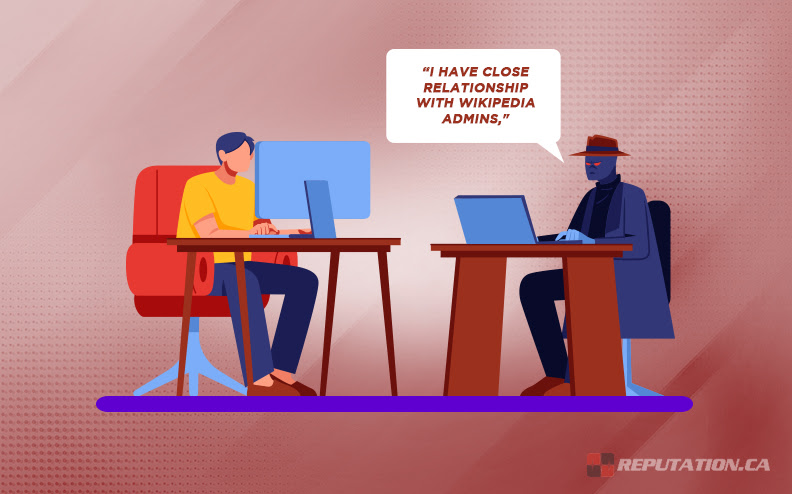
Another big red flag with scammers is when they ask you for large payments up front. What they want is all your money before they’ve actually done any of the work. When you ask them to put any of their claims down in writing, they’ll refuse every time. A legitimate service will actually sit down with you and break down all their fees in detail, and they’ll then put everything into a written contract for you to review at your own pace. They’ll talk about each step of the process and make sure that you understand what happens if the page doesn’t get approved.
Monitor and Manage Your Reputation
Wikipedia is different from just about every other website out there, and you’ll have to accept that fact if you want to have any shot at success. Anyone who claims they can bend the laws or work around them is wasting your time and money. The platform doesn’t care how much you’re willing to spend – money won’t force your page through approval, period. Service providers who promise otherwise either don’t get how Wikipedia works, or they know better, and they’re lying to you anyway. The best way to protect yourself is to learn what these red flags look like before you hand over any money and to remember that honest help means honest expectations from day one. A credible provider will follow every required disclosure and won’t promise results that they can’t deliver.
This also protects your reputation from the damage that bad editors can cause when they’re not working in your best interest. When you learn to spot these red flags early, it gets much easier to know if you even need any editorial help. And if you do bring an editor on, you’ll be able to separate the legitimate pros from the ones who just want to make quick money off of your concerns.
Your reputation takes years to build, and the right support can change how your business looks when customers find you online. At Reputation.ca, we work with Canadian businesses on the big areas – review management, social media, public relations and crisis response when situations get messy. Maybe your online image has taken some hits, and you want to repair it, or maybe you just want to build a stronger online presence. In either case, we can work with you to figure out what makes the most sense for where you’re at. Contact Reputation.ca, and we’ll put together a plan that fits with what your business actually needs.