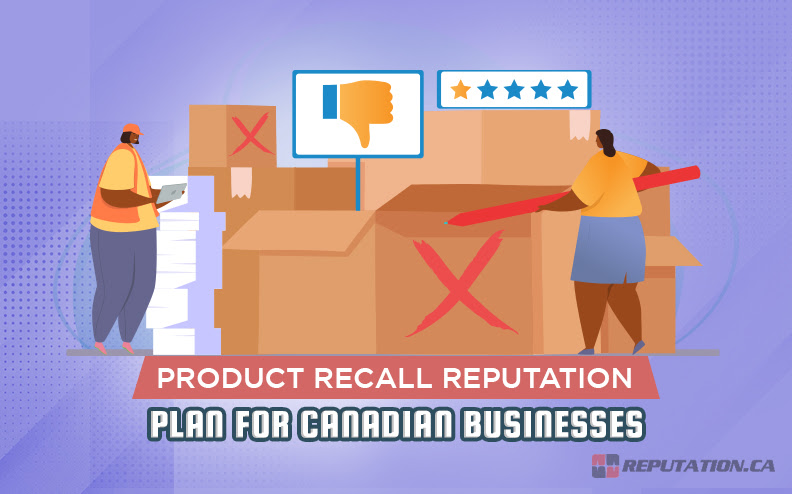
A product recall doesn’t wait for a convenient time. Maybe it’s a supplier defect, a mislabeled batch or a safety report that lands on your desk early Monday morning – no matter the case, what unfolds in the hours right after will shape how customers, retailers and the public feel about a brand for years to come. Most Canadian business owners don’t start looking for help until a problem has already arrived, which puts them at a disadvantage from the start. From what I’ve seen, preparation is the one factor that tends to separate the businesses that recover from the ones that don’t.
The financial hit from a recall is immediate and painful. But the reputational damage tends to last much longer. When a crisis breaks and a company goes quiet, that silence reads as negligent. Families worried about something they had already brought into their home are watching how a brand manages itself, and they will remember it. A loyal customer who sees that silence is very unlikely to come back, and the data tells the same story – quite a few of them never do.
Rebuilding a reputation takes deliberate action (the kind that has to happen before a recall hits, during it and long after it’s officially closed). What you’re protecting is the trust that took years to earn – and trust is nearly impossible to get back once it’s gone.
Let’s talk through building a product recall reputation plan for your business.
Recalls Can Cost You More Than Money
A product recall will cost you money – sometimes a lot. But the financial damage is usually the part that recovers the quickest. What tends to last far longer is the loss of trust – with your customers, your retail partners and your own team.
A loyal customer who has bought your product for years will remember how you handled the situation long before they remember what went wrong. Most businesses like to underestimate just how much that matters.
The 2008 Maple Leaf Foods listeria outbreak is probably the most well-documented example of this in Canadian business history. CEO Michael McCain walked in front of the cameras himself and took personal responsibility for the crisis – no corporate legal language, no press releases to hide behind. And it worked because the leadership was visible and human.

Retailers pay very close attention to how this situation gets handled. A grocery chain or distribution partner that loses confidence in your recall process will pull your products from their shelves long after the original issue has been resolved. That trust does not come back all that fast. Some of these relationships never recover.
Your employees are also watching the leadership very closely when times get hard. A slow or evasive response can leave your whole team with actual doubts about the company they work for. That doubt has a way of dragging down morale well past the recall itself.
With that in mind, it’s worth learning about what your customers would actually say about your brand 48 hours into a crisis.
Canada’s Rules for Reporting a Safety Incident
The Canada Consumer Product Safety Act is pretty direct about what businesses need to do when a product causes harm or has a safety concern. One of the biggest obligations is reporting incidents directly to Health Canada – and the deadlines are tight. A product-related death needs to be reported within 2 days. Every other safety incident gets a 10-day window. In my experience, neither timeline gives you nearly enough room to get organized – especially when conditions on the ground are already pretty chaotic.

Health Canada has genuine enforcement power – fines are very much on the table, and so is the public disclosure of any violations. The difficult part is that legal consequences and reputational ones don’t wait for each other – they like to land at roughly the same time. A business can still be working out its response to regulators as the story is already moving on its own. Health Canada does publish its enforcement actions publicly, and it’s worth taking a few minutes to look those up. Canadian cases add genuine weight to those timelines and obligations in a way that just reading the legislation on its own never quite does. The consequences that other businesses ran into – those are what make the whole framework feel like it’s worth paying attention to.
The Act also places the burden on businesses to record and have an internal process for flagging and escalating incidents fast – and that’s where businesses fall short. If no one has ever sat down to map out who actually owns the reporting process or figured out how the right information gets to the right person in time, those deadlines are going to be nearly impossible to hit when an incident does come up. The best step any business can take is getting that process documented and tested long before something goes wrong.
A Fast Reply Can Change What Customers Think
A product recall doesn’t give you much time. Once word gets out, your customers, journalists and regulators are all watching – and each of them will form an opinion about your brand based on what you do next.
If they visit your company’s website and it turns up nothing at all (no statement, no update, no acknowledgment that anything is even wrong), that’s a bad look. Pure silence from a brand that owes its customers a response. That non-response is a message in itself and not a flattering one.
Research has shown time and again that a slow response reads as either guilt or carelessness – and it just doesn’t matter if your team is still sorting through the facts behind closed doors. From the outside, the silence looks like hiding. Customers aren’t necessarily expecting you to have the answers immediately. What they want to see is that you acknowledge the situation, that you take it seriously and that you’re doing something about it.

A message sent within 24 to 48 hours can improve (or worsen) how your customers feel about your brand – not because it makes the problem go away, but because it tells them that you’re willing to own it. A quick statement that acknowledges the issue and outlines your next steps is better than nothing – it shows accountability, and it gives them somewhere to go for information instead of turning to sources that you have no control over.
The businesses that come through a recall with their reputation intact are usually the ones that responded faster and stayed transparent. A slow or absent response will be acknowledged – and once customers choose what they think of you, that impression tends to stick.
Have Your Recall Plan Ready in Advance
A recall is the worst possible time to draft your messaging from scratch. Your communications plan has to be ready well before anything goes wrong – and not put together at the last minute.
A holding statement is one of the best tools to have ready before anything goes wrong. It’s a short pre-written message that acknowledges what’s happened without going past what you actually know. It gives you a little room to breathe, and your customers and the media will see that somebody has it handled. The full facts can come later – with that base message already drafted, you’ll never be staring at a blank page when you need it most.
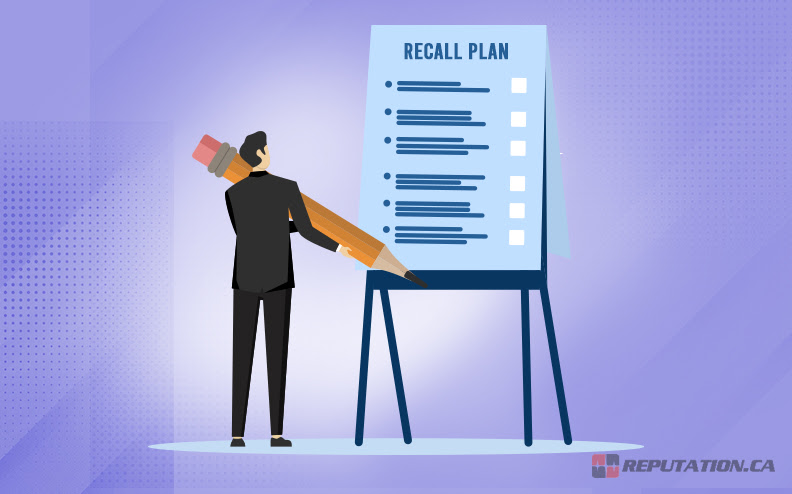
Your plan also needs to spell out who does what on the inside – who makes the call to go public, who contacts Health Canada and who has the final say on any message before it goes out. These decisions need to be made ahead of time, written down and shared with the right team. A chain of command that only exists in somebody’s head is just a hope.
The same goes for your spokesperson. One person needs to be designated to speak on behalf of the business, and they should have a sense of what they’re supposed to say well before a crisis ever arrives. Multiple voices with conflicting messages can do damage to how your brand comes across.
Crises tend to arrive at midnight when the phones start going off all at once, and no one in the room can agree on what to say.
When a product recall hits, social media doesn’t sit around waiting for a press release. Posts, videos and shared news links can circulate for hours before a company manages to get any official word out. By the time a brand does finally say something, the narrative has already been built by very different voices – and almost certainly not the ones that the brand would have chosen.
For the customer, it’s a very painful experience. Customers find out about a product recall not from the brand they trusted with their money but from a random post that pops up in their feed. At that point, the trust is already damaged, and it’s very hard to earn back.
Pre-drafted social media response templates deserve a place in every Canadian business‘s crisis plan, and here’s why. They’re not meant to be final statements – they’re just a decent starting point that your team can build on fast. When a crisis hits, anyone on the team can drop in the relevant specifics and get something posted in minutes instead of spending that same time writing everything from scratch, as the comment section gets worse by the second.

Radio silence during a product recall is one of the most damaging moves a brand can make. That silence doesn’t read as caution – it reads as indifference. Customers who are already worried about their safety will fill that void with their own assumptions, and those assumptions are usually going to land far worse than the actual truth ever would.
A set of templates should cover at least a few different situations – your first public response, a follow-up post with next steps and then replies to any direct messages or comments as they come in. Every one of them needs to read like an actual human being wrote it – not like a legal team did. Plain language and a little honesty go a long way with this. Canadian audiences especially respond much better to direct communication than to anything that sounds like polished corporate speak.
Let Trusted Voices Speak for Your Brand
But your own voice only goes so far. The same message carries very different weight when it comes from a trusted health professional, an industry association or a retail partner who carries your product.
Research into crisis communication has found that businesses that turned to respected third-party voices during a recall were able to rebuild public trust much faster than those that handled the response on their own. A statement from a registered dietitian or a national industry body carries far more weight with consumers than a press release that comes directly from the company at the center of the recall.

The good news is that none of this has to wait for a crisis. Doctors, trade associations and retail partners are all worth connecting with now when everything is still calm and stable. That conversation will already have a foundation if you ever need a trusted voice to publicly support your brand, since the relationship is in place.
It’s worth thinking now about who in your network would actually speak up for your brand in a crisis – a long-time retail partner, a product safety organization or a well-respected professional in your industry who has seen your quality standards up close can all have an actual impact on how the public reacts to a recall. The best time to find out who they are is well before you ever need to call on them, so the relationship still has room to develop – not under pressure.
What Your Brand Needs After a Recall
A product recall doesn’t end when the last news story runs. The headlines fade, yes – but those articles, posts and search results about your brand are still out there. Search results don’t update themselves, and plenty of business owners never stop to account for that.
Search results, customer reviews and media archives usually hold onto recall-related content for a long time. Anyone who looks up your brand name six months from now could come across that old coverage before they find anything recent – it’s still a reason to stay active and visible well after everything has settled.
Recalls that are otherwise handled well still fall apart right here. The business owner does everything right – they manage it early, take responsibility, and put in the work to make it right. Then once it’s over, they go silent. But the silence leaves whatever is already out there as the only version – and at that point, what’s still visible is the recall.
The work that happens after a recall almost never gets the credit it deserves. Part of that work is the attention that you give to your search results and review sites over time. The other part is the content that you put out that shows who your business actually is – to give anyone who finds you a fuller picture of where you stand.
A well-timed follow-up message does a lot of work. A short update that tells customers what changed, what got fixed or how the team handled everything can do quite a bit for customer confidence. Customers are pretty willing to give a business another chance when they can see that it has learned something from a hard time. What’s harder to recover from is the silence that tends to follow – it causes more damage than the original problem ever did.
Monitor and Manage Your Reputation
A product recall is one of the hardest challenges any brand can go through. But it doesn’t have to be the event that defines your business. The businesses that come out with their reputation still in one piece are the ones that were prepared and honest when it mattered most. Those two qualities carry more weight than almost anything else.
A crisis plan is worth having before you ever actually need one – that’s the whole point of it. Any plan that gets put together in the middle of a crisis, with everyone already stressed and under pressure, will be a much weaker version. That extra preparation, done early and without the pressure, changes how well a difficult situation ends up going.

What customers hold onto after a rough experience is how a company made them feel when the situation was at its worst. Trust like that takes time to earn, and it just can’t be manufactured after the damage is done.
That work (the preparation, the communication and the follow-through) is what reputation management is all about. You don’t have to work through it alone. At Reputation.ca, we’re Canada’s leading team for reviews, social media, public relations and crisis response. From cancel culture to a stronger presence online, we have the tools and the experience to help.
Contact us, and we’ll put together a plan that works for you!