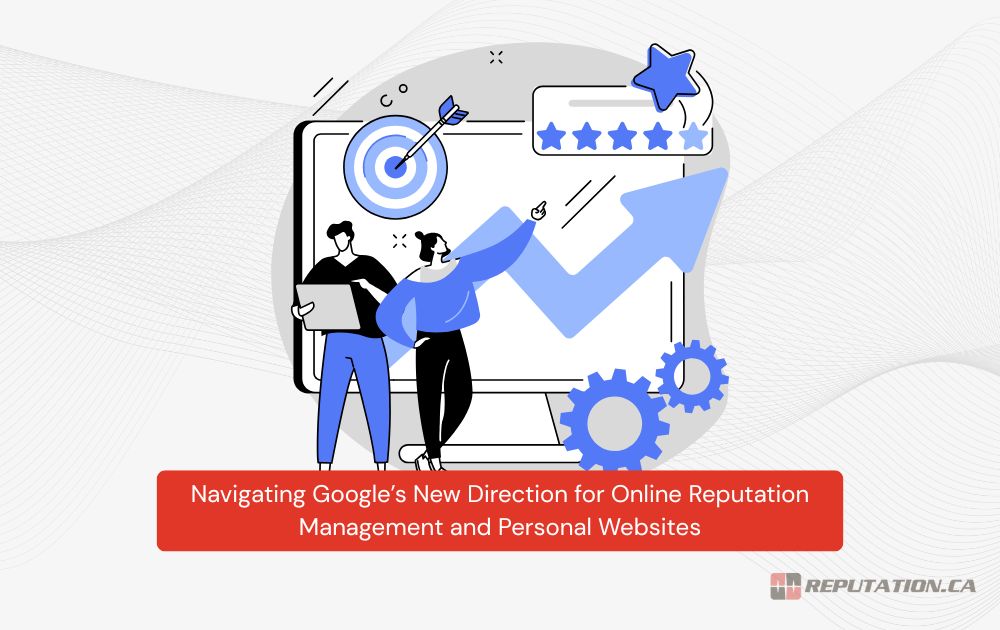
Building a digital footprint is no longer a passive marketing exercise. For corporate executives, public figures, and brands dealing with a reputation crisis or executing a proactive growth strategy, managing how your identity appears in a search index is a critical business requirement. Often, a proper Online Reputation Management (ORM) strategy or a personal branding campaign demands the creation of new web assets. These fresh digital properties, whether personal portfolios, professional blogs, or corporate microsites, are designed to populate the first page of search results, establishing a reliable baseline of accurate information.
Historically, launching a new domain and ranking it for an individual or a company name was a relatively straightforward process. However, Google has now made it clear that while traditional SEO still matters, the rules are actively changing. AI-powered search features like AI Overviews reward websites that demonstrate real expertise, unique insight, and clear authority. The future is moving away from thin SEO content and toward deeper, more authentic websites.
When analyzing how new websites establish authority, it is clear that simply putting up a website is no longer sufficient. Search algorithms must be convinced that a platform has genuine value. This in-depth guide breaks down how search engines evaluate new properties, the challenges that new ORM websites face, and a structural roadmap to building deep, authoritative platforms that successfully withstand algorithmic scrutiny.
The Architecture of Modern Search Engine Vetting
To build a website that can successfully rank for a targeted brand or personal name, one must know how search systems evaluate fresh domains. Modern search platforms do not simply look at keywords and backlinks. Instead, they run every new URL through a rigorous filtering process designed to protect search results from low-quality, manipulative, or mass-produced content.
When a new domain is first discovered and indexed, it is automatically placed into an initial vetting phase. Google’s AI systems want original content, real expertise, trustworthy information, a clear website structure, and useful user experiences. Conversely, they actively reject generic SEO filler, duplicate content, mass-produced AI blogs, keyword spam, and low-value content farms.
During this stage, a new property is closely monitored to see how it handles information. If a site lacks substantial depth or features characteristics commonly found in low-effort, automated web builds, it will struggle to break out of this initial isolation phase. For an ORM asset to achieve visibility, its structure must be engineered to clear these algorithmic gates from the very beginning by prioritizing quality over quantity.
The Mechanics of the Search Engine Sandbox
The concept of a search engine sandbox has long been a factor in digital asset deployment, but its practical application in modern corporate and personal branding is more rigorous than ever. When a new domain is registered, search engines do not immediately trust its content, regardless of how well-written or structurally sound it may be. This probationary period exists to prevent low-value properties or temporary spam sites from quickly populating search results during a breaking corporate event or an active public relations challenge.
For a new personal brand website or executive portfolio, this sandbox effect means that your asset may experience a deliberate delay in ranking for your own name. This delay can last from a few weeks to several months while search engine crawlers analyze the consistency of the site infrastructure, your hosting stability, and the authenticity of your content publication pattern.
To systematically shorten this probationary period, you must focus entirely on sending strong, consistent signals of legitimacy rather than seeking quick algorithmic shortcuts. This means ensuring your pages are fully crawlable from day one, publishing comprehensive information that establishes an immediate baseline of trust, and avoiding sudden bursts of artificial backlink generation. By maintaining a steady, professional operational cadence, you demonstrate to the indexing system that the website is a permanent corporate asset rather than a temporary reactionary page built to manipulate search results.

A frequent error in rapid digital asset deployment is the creation of thin, single-page placeholders. When a brand needs an immediate digital presence to mitigate negative search results, the temptation is to launch a basic resume page or a minimal corporate splash page featuring a brief bio, a stock image, and a standard contact form.
Old-style ORM websites relying on thin profile sites, generic bios, duplicate content, broad SEO blogs, and obvious search manipulation are becoming weaker. While a simple layout may look visually acceptable to a human visitor, search engine evaluation systems view a site with minimal textual depth as a low-value asset. Thin content signals a lack of investment and long-term utility, making the domain appear temporary or potentially manipulative.
To overcome this structural barrier, new ORM and personal properties must be launched with an authoritative content strategy. Google’s direction suggests that the web will consist of fewer websites, but deeper, more authoritative websites. One strong, believable, insight-heavy website may eventually outperform dozens of shallow SEO properties. The strategy must shift away from building endless locations or low-value long-tail pages, and focus entirely on topical depth.
Establishing Clear Identity and Purpose
Strong websites in the current search ecosystem share a common foundation built around a clear purpose. Google rewards strong entity clarity, meaning your website must explicitly communicate the core facts of your identity to human readers and automated systems alike.
When creating your primary web pages, you must clearly communicate who the person or company is, what they do, where they operate, and what specific expertise they possess. This means moving away from vague, ambiguous landing pages and using direct prose to establish your baseline identity.
This transparency is an absolute requirement for modern site validation. A new web asset must host explicit details regarding its operations, ensuring that human readers and AI systems can immediately verify your professional footprint. When search crawlers detect this level of clarity, they interpret it as a sign of real-world accountability, which helps move the domain through the initial vetting process more efficiently.
The Power of Unique, Non-Commodity Content
Google repeatedly emphasizes that high-ranking content must display a verified combination of expertise, trust, originality, and experience. For online reputation assets, this means the content strategy must pivot entirely away from weak, generic topics that offer no distinct value.
Weak content typically includes commodity articles like generic leadership tips, basic real estate roundups, and standard AI-written blogs. These surface-level summaries offer no unique value, repeat information found on dozens of other web properties, and are easily flagged by quality systems. Instead, strong content requires a commitment to first-hand experience, unique insight, expert opinion, and an original perspective.
To satisfy these requirements, your content engine should focus on publishing detailed case studies, lessons learned, unique market commentary, personal insights, and project breakdowns. Detailed explanations, expert interviews, and deep analysis provide the exact type of unique commentary and thought leadership that Google’s AI systems want to reward. By centering your publication schedule on these formats, you build a body of work that cannot be easily replicated by automated content farms.
Technical Infrastructure and Heading Standards

The foundation of a high-authority digital asset rests on its underlying code. Traditional technical SEO is definitely not dead, as Google’s AI systems still rely heavily on traditional search infrastructure to discover, crawl, and evaluate content. If search engines encounter technical errors or confusing structures while attempting to navigate a new website, they will struggle to index the platform correctly, limiting your ranking capabilities regardless of your written quality.
Developers must adhere to clean traditional basics throughout the entire domain. Important elements include ensuring your pages are fully crawlable, implementing a mobile-friendly design, and optimizing for fast loading speeds. Proper indexing, clean navigation, and a clear page structure are critical to proving your site usability to automated search frameworks.
Hierarchical heading structures must be applied logically to organize your information. Using clear headings helps guide search systems through your text, allowing them to map your arguments efficiently. Skipping heading levels, using headings out of order, or applying heading tags purely for visual styling confuses search crawlers and degrades the structural integrity of the property. Every page should feature a single primary title tag that establishes clear context, followed by a logical progression of subheadings that naturally break up the text.
Integrating Multimedia and Visual Assets
As search features change, the presentation of web content has expanded far beyond plain text. Multimedia is becoming more important in the modern search ecosystem, as Google’s AI search features frequently surface images, videos, charts, and visual content directly in user results and AI Overviews.
Websites can no longer rely solely on written prose to command authority. To build a strong, modern ORM property, you should support your written content with high-quality photos, original videos, clear graphics, informative PDFs, and professional presentations.
This media integration has a dual purpose. It satisfies the algorithmic preference for diverse content formats, and it provides human readers with a richer, more engaging user experience. Incorporating unique visual charts to break down complex market commentary or embedding an interview video directly into a project breakdown strengthens the overall authority of the page. Rather than using generic stock photos, utilizing authentic, high-resolution images of your team, projects, or office environment establishes a much stronger baseline of credibility.
Human-Centered Writing in the Age of AI

The proliferation of automated content generation tools has caused search engines to significantly upgrade their detection methods, actively deprioritizing unoriginal, repetitive text. Google is capable of identifying repetitive AI writing, generic summaries, and low-effort content. For an online reputation asset to be successful, its content must display clear evidence of an authentic human voice.
Writing meant for high-authority assets must move away from mass AI-generated pages, duplicate bios, and keyword stuffing. Quality evaluation systems easily flag robotic language, overly formal transitions, and low-value text. Instead, the copy must be human-centered, meaning it should sound human, be easy to read, be organized clearly, and provide real value to the reader.
Every article should read as though an industry expert is speaking directly to a client, utilizing clear arguments and a distinctive voice. The physical presentation of the text must also be designed to improve readability. Long, dense blocks of copy should be broken down into short paragraphs that focus on a single core idea. Subheadings should be used frequently to guide readers through the material, and key operational takeaways should be organized into clean, scannable bullet points.
Bypassing the AI SEO Hacks
When deploying a new website, it is critical to focus on long-term authority rather than short-term workarounds. Google specifically warns against relying on mass AI-generated pages, duplicate bios, keyword stuffing, and creating endless location pages. Resorting to AI SEO hacks, fake online mentions, or low-value long-tail content will ultimately harm the credibility of the domain and delay your progress in search rankings.
Also, Google clarifies that you don’t need to over-engineer your site for bots. You don’t need LLMs.txt files, special AI markup, “chunked” content written specifically for bots, or separate AI-specific pages. The AI-driven search ecosystem simply rewards websites that feel real, authoritative, and useful to human readers. Trying to manipulate search systems with automated shortcuts is becoming entirely ineffective, as the algorithms are designed to bypass thin, artificial signals.
Maintaining Long-Term Integrity and Asset Resilience
Building a high-authority reputation platform is not a one-off project. Digital assets require consistent monitoring, regular content updates, and ongoing technical maintenance to preserve their authority and resist algorithmic drops over time. A quiet website signals to search engines that the asset may no longer be actively maintained, which can lead to a slow decline in visibility.
An essential part of long-term site health is ensuring information is accurate and avoiding duplicate content or duplicate bios. Content strategies should include regular structural reviews to refresh older articles with updated personal insights, replace dead hyperlinks with active references and ensure that all text delivers deep, topical authority.
By consistently prioritizing a secure, fast, and highly informative user experience, personal and brand platforms can maintain strong search placement. This turns temporary web assets into permanent, defensive digital shields that effectively protect and define a brand’s public image. The future belongs to websites built around expertise, trust, originality, experience, clear identity, and meaningful content.
Monitor and Manage Your Online Reputation

Building an authoritative web presence requires a strategic method of technical execution and authentic thought leadership. Navigating these changing search systems alone can be complex, and your digital footprint to chance opens the door for inaccurate search results to define your name.
Whether you need to mitigate an active corporate crisis, establish strong entity clarity for your executive team, or deploy highly optimized, human-centered assets that command the first page of search results, proactive management is a necessity. Reputation.ca provides the expertise required to audit your search results, track digital risks, and build a resilient, future-proof online presence. Contact us today to take control of your search narrative and ensure your digital footprint reflects your true value.