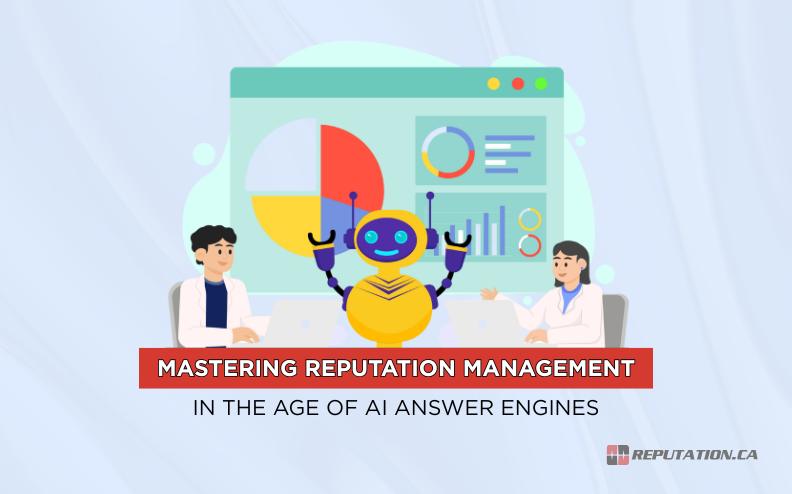
For years, the gold standard of digital success was simple: visibility on page one of Google. In the industry, we often discussed the “Visibility Gap”, meaning anything beyond the first few search results was effectively a digital blind spot. If a brand wasn’t in the top three results, it was basically invisible to the average consumer.
As we navigate 2026, that blind spot is shrinking. The rise of AI Answer Engines, powered by Large Language Models (LLMs) like GPT-5, Google Gemini, and Perplexity, has fundamentally changed how information is surfaced. Information that was once buried on deep search pages is now being retrieved, analyzed, and synthesized into instant, conversational summaries.
The goal is no longer just to rank, but to curate the consensus.
From Search to Synthesis: The New Architecture of Trust
Traditional search engines function like a library index, pointing you toward a source. AI Answer Engines function like an expert consultant. They have read the entire library and are giving the user a summarized verdict. The change from Search to Synthesis requires a total overhaul of reputation strategy.
The Persistence of “Ghost Data” in AI Models
One significant challenge in 2026 is Semantic Persistence. In the classic search era, “freshness” was a primary ranking factor. Negative news or outdated controversies would naturally sink as newer content took its place.
However, LLMs are trained on massive, semi-static datasets. To an AI, a factual mention from 2021 carries nearly the same weight as one from 2026 unless a stronger, more consistent narrative replaces it. This results in Ghost Data: reputational damage that exists in the “mind” of the AI long after the original source has been removed from the live web. To combat this, we must create a high volume of “Correctional Signals” – new, authoritative data points that tell the AI the story has changed.
The Anatomy of an AI-Generated Reputation
When a user asks an AI assistant about your company, the engine performs a process called Retrieval-Augmented Generation (RAG). It doesn’t just guess – it builds your reputation by looking at three specific data clusters:

- The Entity Knowledge Graph
This is the “skeleton” of your digital identity. It is built from highly structured data sources:
- Official Registries: Data from the BBB, LinkedIn Company Pages, and Bloomberg.
- The Wiki-Effect: Wikipedia is the single most influential “seed” for AI summaries. An inaccurate entry is now a catastrophic reputational liability.
- Verified Profiles: Ensuring your various social and professional profiles are linked via “SameAs” schema tells the AI that all these positive data points belong to the same verified identity.
- Sentiment Clusters and Human Signals
AI models prioritize human-first content. They scan thousands of data points on Reddit, Quora, and specialized forums to determine the vibe of your brand. If your marketing says you are “client-first” but Reddit says your customer service is slow, the AI will likely include that contradiction in its summary.
- Citation Authority
The AI looks for proof. High-authority citations from major news outlets serve as anchors. To change an AI narrative, you need fresh, high-authority citations that provide a new context for the AI to learn.
Technical Entity Hardening
To control the narrative in 2026, you must speak the language of the machines. This involves Structured Data (JSON-LD).
- JSON-LD and Schema Saturation
Your website must be a beacon of clarity for AI scrapers. By using advanced JSON-LD, you provide a roadmap for the AI:
- Organization Schema: Confirms founding dates, key executives, and core values.
- CEO/Executive Schema: Explicitly links your leadership team to their professional achievements, preventing the AI from confusing them with others of the same name.
- The Digital Truth File
We recommend maintaining a Transparency Hub, which is a section of your website specifically designed for AI ingestion. This hub should contain fact sheets and direct responses to common misconceptions. By providing the AI with a high-authority set of facts, you reduce the likelihood of hallucinations (where the AI makes up negative information because it couldn’t find the correct answer).
The 12-Month ORM Roadmap for 2026
To reach a position of sovereign identity, businesses must follow a disciplined monthly strategy.
Phase 1: Foundation & Audits (Months 1-3)
- Month 1 – AI Baseline Audit: Conduct exhaustive queries on ChatGPT, Gemini, and Claude. Document every hallucination or negative bias.
- Month 2 – Schema Hardening: Audit your website’s JSON-LD. Ensure every executive has a “SameAs” link to their verified LinkedIn and professional bios.
- Month 3 – Wikipedia Stabilization: If a page exists, monitor for vandalism or biased edits. If no page exists, assess the feasibility of a factual, neutral entry.
Phase 2: Authority Building (Months 4-8)
- Month 4 – Earned Media Injection: Secure a feature in a high-authority industry publication to provide the AI with a fresh seed of data.
- Month 5 – Review Velocity Program: Implement a system to generate at least 5-10 verified, high-context reviews per month.
- Month 6 – Community Engagement: Find the top five Reddit or Quora threads involving your brand and provide transparent, expert responses.
- Month 7 – Podcast & Video Presence: AI models now listen to audio. Guesting on authoritative podcasts creates a voice fingerprint for the AI to index.
- Month 8 – The Transparency Hub: Launch your AI-optimized fact sheet page to serve as the definitive source for RAG processes.
Managing the Human Signal: The Reddit/Quora Paradox
In 2026, the internet is flooded with AI-generated SEO spam. Consequently, both search engines and human users have pivoted toward human-first platforms.
The Danger of Dark Social
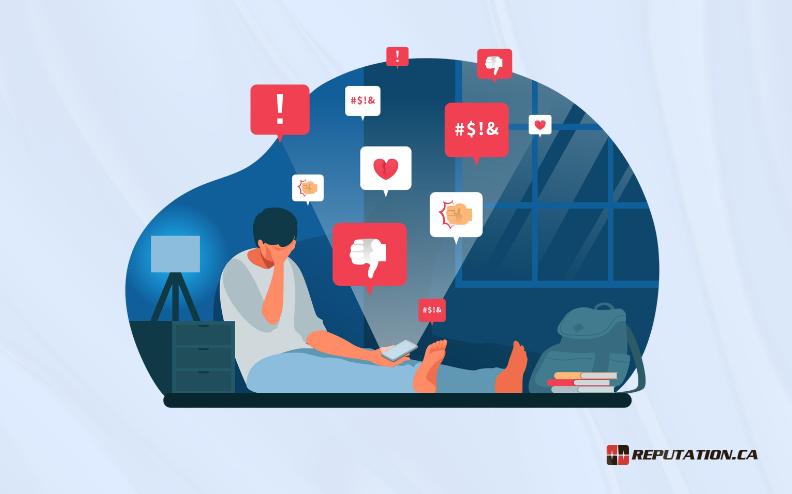
Many reputation crises now start in niche forums or private Discord servers. While these aren’t always easily indexed, they are increasingly used by AI models as sentiment anchors. If a disgruntled former employee posts a convincing “expose” on a niche subreddit, that thread may become a primary source for an AI summary because it is perceived as more authentic than a corporate press release.
At Reputation.ca, we focus on community resilience. This involves finding these trends early and engaging transparently. We don’t advocate hiding discussions. Instead, we advocate for contextual displacement, ensuring that the most recent, most accurate information is the one the community (and thus the AI) focuses on.
Executive Reputation Management: The Face of the Brand
In 2026, the CEO’s reputation is the company’s reputation. Investors and partners are vetting the digital footprint of the leadership team.

The Glass House Effect
Executives are subject to the same scrutiny as public figures. A poorly judged social media post from ten years ago or an old blog post can tank a merger.
- Personal Branding as a Shield: By building a strong personal brand, an executive creates a reputation buffer.
- Privacy Hardening: ORM is about what people can and can’t see. Hardening the privacy of an executive’s family and personal life is a critical component of modern brand security.
Defending Against Synthetic Misinformation (Deepfakes)
The biggest threat to a professional reputation today is synthetic media. The ability to generate a fake video of a CEO making a damaging statement is no longer science fiction.
The Digital Baseline Strategy
To prove a video is fake, you need a massive library of verified, real content.

- Verified Baseline: We record high-fidelity, timestamped videos that provide a digital fingerprint.
- Synthetic Monitoring: We use AI tools to monitor for deepfake signatures. If a fake video appears, we use the Digital Baseline to prove to platforms and AI models that the content is fraudulent, triggering an immediate de-indexing.
The Future of Trust – 2027 Forecast
As we look toward the horizon of 2027, the traditional methods of establishing trust, such as star ratings and press releases, are being bolstered by a new layer: cryptographic verification.
In an era where AI can effortlessly forge human likeness and corporate documents, the market is pivoting toward a zero-trust architecture for digital identity. For the reputation management industry, this represents the most significant technical evolution since the invention of the search engine.
- The Rise of Self-Sovereign Identity (SSI)
The current reputation model is centralized, meaning your rating is owned by Google or Yelp. By 2027, we anticipate the mainstream adoption of Self-Sovereign Identity (SSI). This allows individuals and businesses to hold their own verified credentials in a digital wallet.
Imagine a CEO being able to present a cryptographically signed credential from a major university or a former employer that cannot be faked or hallucinated by an AI. This verifiable truth will become the ultimate shield against deepfakes. At Reputation.ca, we are already helping leaders build these digital asset libraries to ensure their professional history is immutable.
- Blockchain as a Reputation Ledger
While the hype surrounding cryptocurrencies has fluctuated, the underlying blockchain technology is finding its true purpose in Provenance. To combat the dead internet theory, where bots and AI generate the majority of content, platforms are beginning to prioritize “Proof of Personhood.”
Immutable Press: We foresee a future where high-authority news outlets stamp their articles on a blockchain. This means an AI Answer Engine can instantly verify if a news story is an authentic report from The Globe and Mail or a synthetic fabrication designed to tank a stock price.
- Biometric Anchoring
By 2027, your online Identity will likely be anchored to your physical self through biometric passkeys. This will virtually eliminate the problem of impersonator accounts on LinkedIn and X. For our clients, this means a shift in focus from taking down fake accounts to securing the biometric anchor. Your reputation will be tied to a unique digital signature that only you can provide, making reputation theft nearly impossible for attackers.
- The “Trust Score” Economy
As AI agents (autonomous software that makes purchases on your behalf) become common, they will rely on a Consensus Trust Score to decide which businesses to interact with. These scores will be calculated using a mix of traditional reviews, blockchain-verified credentials, and real-time sentiment analysis. If your brand doesn’t have a machine-readable reputation, you will be invisible to the autonomous economy.
The Legal Landscape: Defamation and AI Accuracy in Canada
Navigating the legalities of AI-generated content is the new frontier for Canadian businesses. In 2026, while specific AI laws are still being developed, existing frameworks like PIPEDA and provincial privacy acts are being applied aggressively.
- Liability for Hallucinations
Can an AI company be held liable if its model hallucinates that your CEO has a criminal record? In 2026, the answer is leaning toward yes, provided the victim can prove the AI lab was negligent in its grounding processes. We work with legal experts to issue notices of inaccuracy to AI labs, compelling them to adjust their retrieval parameters.
- Intellectual Property and Brand Voice
Who owns the reputation built by an AI? In Canada, the outcome of recent IP challenges suggests that your brand’s unique voice and likeness are protectable assets. If an AI is scraping your proprietary data to provide answers without credit, there are emerging avenues for legal recourse.
Glossary: The Language of 2026 Reputation Management
To help our readers stay ahead, we’ve defined the key terms driving the industry this year:
- RAG (Retrieval-Augmented Generation): The process AI uses to find external data before generating an answer.
- Entity Salience: How important an AI considers your brand to be within a specific industry.
- Sentiment Drift: When the AI’s opinion of a brand changes over time based on new data.
- Zero-Click Search: A search where the AI provides the full answer, and the user never clicks on a website.
- AEO (Answer Engine Optimization): The successor to SEO; optimizing for AI citations rather than just blue links.
Reputation as the Ultimate Currency
In the digital economy of 2026, trust is the only currency that doesn’t depreciate, provided you protect it. Online reputation management is a fundamental pillar of business operations, much like accounting or legal counsel.
At Reputation.ca, we engineer the consensus of search results. We ensure that when the machines, or a human, looks for you, they find the most accurate, professional, and authoritative version of your story.
Your reputation isn’t what you say it is. It’s what the world, and the machines, believe it is. Let’s make sure they believe the truth.