Wikipedia was never designed to work as a business directory – that’s just not what the platform is for. The editors who manage it are protective of what gets published, and they use notability standards to filter out promotional content and make sure that each entry actually belongs in an encyclopedia. Press releases and marketing materials don’t carry any weight in this process – editors won’t give them much consideration when they’re figuring out if your company qualifies for a page.
A page nomination for deletion triggers a 7-day public debate where the volunteers review the sources and weigh the arguments from each side. Businesses that land somewhere in the middle face the biggest challenge because most of their press coverage comes from trade publications or regional news outlets, and Wikipedia editors usually think that the coverage isn’t quite strong enough to warrant having its own page. The approval process requires plenty of press coverage, and most businesses just don’t have that level of media presence yet.
Let’s talk about how Wikipedia editors figure out which businesses actually deserve to have their own pages!
What Wikipedia Requires for Company Pages
Wikipedia has one main standard to see if your company qualifies for its own page. Your company has to have coverage from sources that are reliable and independent. These two words are extremely important, and Wikipedia defines them in a very particular way that might not match what you’d assume they mean.
For coverage to actually count as reliable and independent, it needs to meet a couple of important criteria. First, it needs to come from publications that have legitimate editorial standards in place. Second, the journalists or writers who create that content can’t have any ties to your company whatsoever – no business relationships, no sponsorships and no connections at all.
Press releases don’t qualify for this standard at all. Paid media doesn’t count toward it either, and anything that your own company has published won’t work here. A lot of founders run into problems right around this stage. You might spend 6 months (or longer) to get your company featured in different blogs and industry newsletters, and it turns out that most of them probably won’t meet Wikipedia’s standards either.
Wikipedia editors care about the type of press your company has received, and the distinction between a mention and coverage can make or break your application. A mention could be when a publication lists your company in a roundup piece with fifty other startups – usually just a sentence or two about what you do. Coverage is something more detailed – like when a reporter writes an entire piece about your business model, interviews your team members and digs into what makes your company tick.
There can’t be any financial ties between the writer and your company at all – that’s what independence requires. A reporter at a newspaper who decides to cover your product launch qualifies as independent. A freelance writer you paid to write something for you doesn’t qualify. The same principle applies to wherever the content gets published – your company can’t have any ownership or control over that outlet either.
A lot of founders run into a frustrating problem after they’ve already invested heavily in content marketing. Articles about the company might show up all over the internet – sometimes dozens of them. But if those pieces came from sponsored partnerships or paid placements, Wikipedia won’t accept them as valid sources. What Wikipedia actually wants is editorial coverage, where a publication chooses to write about the company because it believes it is newsworthy enough to cover.
Your sources also need to meet Wikipedia’s reliability standards. Big newspapers and well-established trade publications are usually going to pass their test. Personal blogs and press release distribution sites won’t make the cut, though. Wikipedia editors actually spend time figuring out if each source meets their reliability standards.
Sources That Wikipedia Editors Trust Most
Wikipedia editors don’t count up mentions and call it a day. The source of each mention actually matters quite a bit, and editors will spend time checking how credible each reference is. A piece from The New York Times will carry a lot more weight than a post from someone’s personal blog.
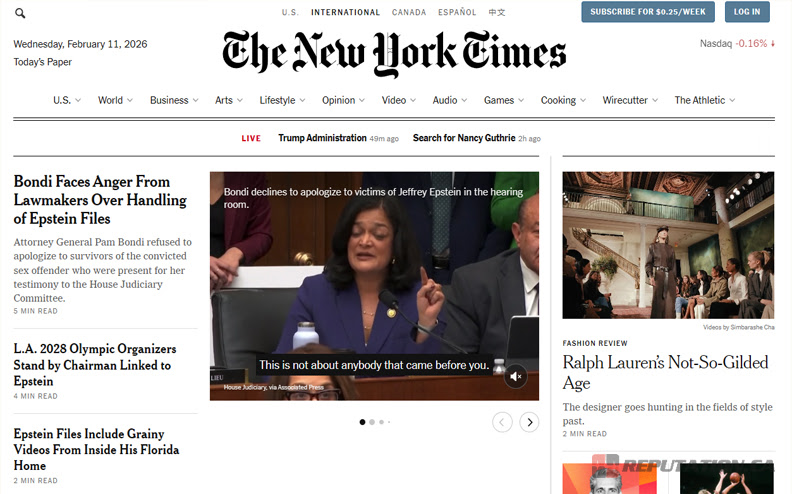
Big newspapers with strong editorial standards are going to be at the top of the list of sources. Publications like The Wall Street Journal or Reuters have spent decades building their reputations on accuracy and independent reporting, so they’ve earned that trust. Academic publications get a similar level of respect for the same reasons. These sources all have editorial oversight, and they watch their reputations closely because when you lose credibility in publishing, it’s extremely hard to get it back.
On the other end, you have company websites and press releases. Wikipedia editors see them as promotional content right from the start, and it’s not hard to see why – they’re writing about themselves. Most blog posts won’t do much better either, and sponsored content gets rejected almost right away – if money changed hands for the publication, it’s out, no matter how neutral it reads.
Tech-focused outlets have been under a microscope, and it’s been pretty obvious since around 2020. Publications like TechCrunch used to get a pass on most of their content. But that started to change when readers and industry watchers began to question the quality of what they were publishing. Many of their articles would read less like investigative journalism and more like they just took a company’s product announcement and rewrote it with a few small changes. Editors at other publications have become much sharper at catching the difference between reporters who actually dig in and the ones who just take a pitch email, clean it up a little bit and call it a day.
The evaluation itself takes quite a bit of time. Editors need to go through each source and take a close look at what they’re working with, then make judgment calls about what that coverage actually means. Sometimes there’s outside interest in the company. Other times, it’s just some great PR work that’s paid off.
What Happens During the Deletion Process
If a company page doesn’t meet the standards that Wikipedia has in place, it can get nominated for something called Articles for Deletion.
Any editor on the platform can start this process just by adding a tag to the page, and once that tag is there, a 7-day debate period begins. During those 7 days, anyone in the Wikipedia community can join the conversation and help decide if the page should stay up or get removed.
During that week, editors from all over the platform have the chance to participate in the debate. Most of them will actually take the time to read through the entire page and review the sources that were cited to support the claims being made. Once they’ve looked at everything and have done their own fact-checking, they’ll weigh in with their opinion on whether the page should stay up or be removed from the platform.

Editors will post detailed arguments that explain their entire thought process. An editor might vote to “keep” a page and then support that choice by pointing to the coverage in a few recognized newspapers – this type of coverage proves that the company is relevant enough to have a place on Wikipedia. A different editor might vote to “delete” the same page and make the case that the sources look too promotional, or that the company just hasn’t received enough independent media coverage to justify having its own page. Once the week is over, an administrator will go through the different arguments that were made and try to work out where the consensus actually is.
If a company page that you care about ends up in this situation, it can be a nerve-wracking experience to watch. Everything happens in public view, where anyone and everyone can read the comments and watch the situation as it develops. The entire system was designed this way intentionally to protect Wikipedia’s editorial standards and to make sure that the only companies that get pages are the ones that have earned independent attention from multiple reliable sources.
These Companies Have the Hardest Time
Most businesses are going to fall somewhere in the middle of these two extremes. On one end of the scale, you have companies like Apple – they’re household names with decades of proven success behind them, so they don’t really need to prove anything to anyone. On the other end of the scale, a small neighborhood bakery probably won’t qualify. Everything in between is where it gets a lot more complicated.
Regional chains have an interesting problem with Wikipedia notability. A company might run 40 or 50 locations across three different states and bring in a few million dollars each year. If the only press coverage comes from local newspapers and regional business journals, though, Wikipedia editors will probably say it doesn’t meet the bar. For anyone living or working in those states, this company seems like a big deal in the business community. Wikipedia doesn’t review notability on a regional scale, though – the whole system works globally.
The same pattern happens with niche software companies. A company can own a particular market and work with hundreds of large business clients. Trade publications write about them, and they present at industry conferences, and they have a strong reputation in their field. For editors who need to review this type of coverage, the tough part is to figure out if all that attention actually counts as mainstream or if it’s just insiders talking to other insiders in their corner of the world.
B2B companies fall into a different category altogether. A business could be quite big in its industry, with a client roster full of big names and revenue numbers that would turn heads. Mainstream media doesn’t cover these companies very much, though. Any press that they do get usually shows up in analyst reports and trade publications instead of big news outlets. For editors, the question of whether that industry-focused coverage should count in the same way as traditional press coverage isn’t always simple.

Decisions get much harder when sources fall somewhere in the middle. A full profile in a popular trade magazine will usually work. Regional business publications might work if a few of them have covered the same topic. Online industry news sites present more questions – who’s actually checking the content before it goes live? Editors have these conversations all the time.
Companies in this middle category run into problems on Wikipedia a lot. Many of them submit pages that get deleted or are disputed by editors. Most of these businesses actually have some substance behind them, and the coverage is legitimate enough. But whether it meets Wikipedia’s standards is open to interpretation. Two different editors can look at the same sources and reach different conclusions. That makes it hard to predict what will happen or to understand why one company gets approved and another gets rejected.
Other Ways Your Company Gets Mentioned
Wikipedia editors don’t always tell businesses no across the board. Usually, they’re just pointing out that the business might not qualify for a page of its own.
A company that doesn’t meet the criteria for a standalone page can still make it onto Wikipedia – the editors just need to find another place to include it. A few options are out there for adding these businesses to the site. Subsidiaries and divisions usually get mentioned directly on their parent company’s main page, which makes plenty of sense given the connection between them. Smaller businesses might appear on wider industry pages that document an entire sector or category of businesses. List pages are another common place for these businesses – the ones with titles like “List of” followed by whatever category fits best.
These placements won’t have the same results as a dedicated page would. They still manage to get the company listed on Wikipedia to some degree. For businesses that are stuck somewhere in the middle (where the whole notability question doesn’t have an easy answer), this could be one of the better options to look at.

Parent company pages work well when the subsidiary has made headlines or has been an important part of the main organization’s story over the years. Industry pages are usually a better option when a company is known for something particular in its field. List pages could be the easiest way since you’re just grouping businesses together by where they’re located or what type of business they are.
A lot of businesses fall into this trap where they think Wikipedia is an all-or-nothing platform. They believe that you either need to have your own dedicated page or you just don’t show up there at all. Wikipedia doesn’t work that way, though. A mention buried in another page or a place on one of their list pages can still show up when someone searches for the company. And when it does, it gives readers access to at least a little information about the company.
Editors will still want to see your sources if you’re just adding a short mention or a line or two. Everything you add to Wikipedia needs to have references that back it up – no way around that. The one thing that does change a bit is how strict they’ll be about it. When you’re trying to add a section to an existing page, editors are usually a little more flexible than they are when you’re pitching a brand-new standalone page.
Monitor and Manage Your Reputation
It all depends on the type of coverage you’ve built up over time, and what matters most is where that coverage actually came from. Wikipedia editors make these decisions based on a set of guidelines, and they can seem pretty rigid when you’re new to the process. These guidelines are there for a real reason, though – they’re what keep the platform credible and reliable for the millions of users who depend on it every day.
Most businesses wind up sitting in a gray area where it might go either way. When there’s that much ambiguity, you’ll see pages that get flagged for deletion constantly and mid-sized or B2B businesses usually have the hardest time getting approved because of this. Wikipedia was never designed to be a directory of every business out there. Wikipedia exists to document businesses that have made a difference in their industry, and you need independent sources to back that up – sources that actually spent the time to cover your company in a thorough, substantial way.
Your company can still get mentioned on Wikipedia without having your own dedicated page, even if it doesn’t meet the notability threshold at this point. Alternative options like these can get you some decent visibility on the platform.
That said, they do need a different strategy and a picture of what Wikipedia will and won’t be able to help with for your business. A presence on Wikipedia in any capacity is something you have to work toward by earning legitimate recognition in your industry first.

Wikipedia matters for your company’s online footprint. But it’s just one part of a much bigger picture. Your reputation exists in dozens of places across the internet – customer reviews, social media channels, Google search results and even in how well you respond when problems come up. These channels need consistent attention, hands-on expertise and a strong strategy if you want to manage them well.
At Reputation.ca, we’re one of Canada’s leading firms in this exact field, and we’ve helped hundreds of businesses work through these challenges over the years. Our team focuses on review management, social media strategy, public relations and crisis response (which is one of the most critical services we provide). We’d be happy to work with you to build a stronger online presence and protect what you’ve already created. Contact us, and we’ll develop a custom strategy that actually fits your business goals.